
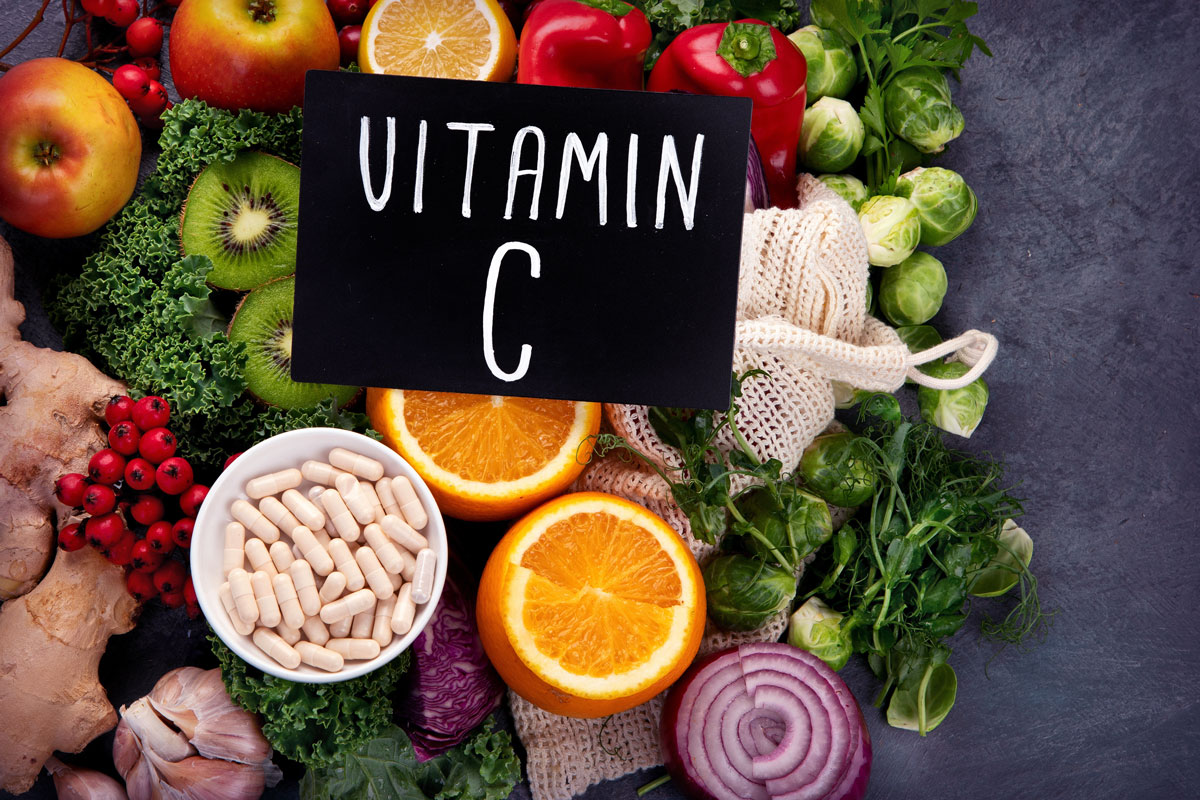
When people hear vitamin C, they most often associate it with the common cold. But this vitamin’s role in the body is much more profound. It is a foundational regulatory nutrient involved in cellular repair, vascular health, detoxification, stress response, and tissue regeneration.
Research data has shown that it can also treat severe health conditions like cancer, cardiovascular diseases, and sepsis. It is one of the most essential and underestimated nutrients in medicine. It is effective, cheap, and it can’t be patented. Nearly every system in the body depends on adequate vitamin C.
Immune System
Vitamin C supports both innate and adaptive immunity by:
- Enhancing white blood cell function
- Supporting antibody production
- Regulating inflammation
- Protecting immune cells from oxidative damage
It is rapidly depleted during infection, which is why needs increase during illness.
Detoxification & Liver Support
Vitamin C:
- Reduces oxidative burden during detoxification
- Regenerates glutathione (the body’s master antioxidant)
- Supports liver detox pathways
- Helps neutralize environmental toxins
Skin, Collagen & Wound Healing
Vitamin C is essential for:
- Collagen synthesis
- Tissue repair and scar formation
- Protection from UV-induced oxidative damage
- Supporting skin elasticity and barrier function
It is one of the most important nutrients for healthy, resilient skin.
While vitamin C provides essential internal support for collagen formation and cellular repair, the skin can also benefit from a stronger regenerative stimulus when it becomes stuck in an aged or damaged pattern. NeoGen PSR is one example of a regenerative treatment that helps trigger new collagen formation and cellular renewal, supporting the skin’s ability to utilize internal nutrients more effectively.
Brain & Nervous System
Vitamin C supports:
- Neurotransmitter production
- Protection against neuroinflammation
- Cognitive function and mental resilience
The brain retains vitamin C even when the rest of the body is depleted.
Adrenal & Stress Response
The adrenal glands contain some of the highest concentrations of vitamin C in the body. It is used to:
- Regulate cortisol
- Buffer the effects of chronic stress
- Support nervous system resilience
Stress rapidly depletes vitamin C stores.
Cardiovascular Health
Vitamin C helps maintain healthy blood vessels by:
- Supporting collagen in arterial walls
- Improving nitric oxide availability (for better circulation)
- Reducing oxidative stress and inflammation
- Supporting healthy blood pressure
Low vitamin C levels are associated with higher cardiovascular risk.
Sepsis & Critical Illness (Therapeutic Use)
In critical care, high-dose vitamin C has been studied for its ability to:
- Reduce oxidative damage
- Support blood vessel integrity
- Improve circulation and tissue oxygenation
- Modulate the inflammatory response
Vitamin C is rapidly depleted during sepsis, and therapeutic dosing is being explored as part of integrative treatment approaches.
Cancer Support (Adjunctive Use)
High-dose vitamin C (especially IV) is being researched as a supportive therapy for:
- Reducing oxidative stress in healthy cells
- Enhancing immune surveillance
- Supporting quality of life during conventional treatment
- Potentially influencing tumor metabolism in certain contexts
It complements conventional care.
Without adequate vitamin C, tissues cannot repair properly, inflammation increases, and the immune system weakens. Severe deficiency historically led to scurvy, a disease marked by bleeding gums, poor wound healing, joint pain, and tissue breakdown.
Why Vitamin C Deficiency Is Common
Most mammals produce vitamin C in their liver (or kidneys) from glucose. They use a simple enzymatic pathway that converts sugar into ascorbic acid whenever the body needs it. When animals are stressed or ill, they increase their internal vitamin C production dramatically.
Humans (along with a few other species) lost the ability to make their own vitamin C through a genetic mutation. Evolutionary, vitamin C was abundantly available in the form of fresh fruit. But with our modern diets, agricultural practices, and daily stresses, this is no longer the case.

Many people are now functionally low in vitamin C due to:
- Chronic stress
- Smoking or toxin exposure
- Poor absorption
- Inflammatory conditions
- Diets low in fresh produce
Mild deficiency may not cause scurvy, but it can slow healing, weaken immunity, and accelerate tissue aging.
Whole-Food Sources
| Food | Approx. Vitamin C |
|---|---|
| Red bell pepper (½ cup raw) | ~95 mg |
| Orange (medium) | ~70 mg |
| Kiwi (1 fruit) | ~65 mg |
| Strawberries (1 cup) | ~85 mg |
| Broccoli (½ cup steamed) | ~50 mg |
| Kale (1 cup raw) | ~80 mg |
| Brussels sprouts (½ cup) | ~48 mg |
| Papaya (1 cup) | ~85 mg |
| Red Cabbage (1 cup shredded) | ~57 mg |
| Acerola cherry (fresh) | 1000–3000 mg (very concentrated) |
How to get Vitamin C from your diet
Many fruits and vegetables, including apples, kiwis, strawberries, and oranges, provide vitamin C. These foods not only supply this essential nutrient, but also enhance its absorption through natural cofactors such as bioflavonoids, enzymes, and fiber. Cabbage, for instance, is one of the most affordable and traditional sources of vitamin C, offering not only antioxidant protection but also gut-healing and detox-supporting compounds.
People following the standard American diet (SAD) often do not get enough vitamin C to meet even basic daily needs. But even a healthy diet rich in fresh fruits and vegetables may not fully satisfy the body’s requirements. Stress, toxins, inflammation, and illness significantly increase the demand for vitamin C, while heat, storage, and food processing reduce the amount available in our food. As a result, many people remain functionally low, even when they are trying to eat well.
Supplementing
To support your needs during illness or periods of high stress, vitamin C supplementation can be a helpful and practical option. As a water-soluble vitamin, excess amounts are excreted through the urine, which makes vitamin C generally very safe for most people.
When intake exceeds what the body can comfortably handle, the most common signs are loose stools, abdominal cramping, or mild nausea. This is often referred to as “bowel tolerance.” These symptoms typically lessen when the dose is increased gradually.
High vitamin C doses have the following effects:
- Iron absorption increases
This is helpful for many, but can be harmful for people with iron overload disorders. - Kidney stone risk for some people
High doses (above 2,000 mg/day for long periods) could increase urinary oxalate, which can contribute to calcium oxalate kidney stones in susceptible individuals. - IV and therapeutic doses
Very high doses (10–50+ grams) are sometimes used intravenously in medical settings for sepsis, cancer support, or severe infections. These doses are not safe to self-administer and must be medically supervised.
Vitamin C is remarkably safe for most people, but like any therapeutic nutrient, higher doses should be used thoughtfully and, when appropriate, under medical guidance. It’s always best to consult your healthcare provider to determine the form and dosage that are right for you.
Absorption
| Form | Relative Absorption | Notes | Best for |
|---|---|---|---|
| Ascorbic acid | High | Standard form, best taken in divided doses | Short term immune and stress support. Affordable and widely accessible |
| Mineral ascorbates (buffered) | High | Gentler on stomach, same absorption | Daily support, sensitive digestion, higher doses |
| Whole-food vitamin C | Moderate–High | Contains bioflavonoids that may enhance tissue uptake | Long-term daily support |
| Liposomal vitamin C | Very High | Bypasses intestinal saturation; higher blood levels | Immune stress, inflammation, skin repair, fatigue |
| IV vitamin C | 100% | Medical only; reaches pharmacologic levels | Therapeutic use under medical supervision |
Some forms of vitamin C supplements are easier absorbed than others. Absorption decreases as the dose increases, which makes smaller, divided doses or liposomal forms more effective than a single large tablet.
Vitamin C in Critical Illness

Vitamin C has been widely studied as a supportive therapy in cancer care for its ability to reduce oxidative stress, support immune function, and protect healthy cells during treatment. At higher therapeutic doses, vitamin C has also been shown to influence tumor metabolism and the tumor microenvironment in ways that may make cancer cells more vulnerable, while leaving normal cells protected. Clinical research suggests that vitamin C may help improve quality of life, reduce treatment-related side effects, and support overall resilience when used as a complementary approach to conventional care.
During sepsis, a severe whole-body inflammation reaction to an infection, vitamin C levels in the body drop rapidly due to extreme oxidative stress and inflammation.
In 2017 Dr. Paul Marik proposed a sepsis protocol which combines high-dose vitamin C with thiamine (vitamin B1) and steroids to supply the body’s higher demand for antioxidants and cellular fuel (know as HAT protocol = Hydrocortisone, Ascorbic Acid, Thiamine). The idea is to address metabolic and physiologic problems that occur during sepsis, not just the infection itself. This protocol could really help many patients, but it challenges traditional assumptions and is still not accepted standard of care. Subsequent studies have shown mixed results, likely due to study setup.


High-dose vitamin C was also the basis of Dr. Frederick Klenner’s clinical treatment protocol for polio and other viruses in the mid-20th century. Klenner found that very high doses of vitamin C appeared to change the course of severe viral illness when given early and aggressively to his patients. But since the polio vaccine (Salk and Sabin) in the 50s and 60s were touted as big successes, Dr. Klenner’s approach with vitamin C was quickly forgotten and no placebo-controlled studies exist on this topic to date.
Other Critical Health Situations Where Vitamin C May Be Supportive:
- Acute Respiratory Distress (ARDS & severe pneumonia)
- Trauma
- Surgery & Burns
- Stroke & Ischemic Injury
- Chronic Inflammatory Conditions
- Adrenal Exhaustion & Severe Stress
Modern medicine is shaped not only by scientific discovery, but also by economic systems. Research funding, regulatory pathways, and clinical adoption are all influenced by what can be patented, scaled, and monetized. This does not invalidate medical innovation, but it does mean that some low-cost, non-patentable therapies receive far less attention, funding, and clinical exploration than their potential might warrant.
Natural compounds like Vitamin C do not attract the same level of large-scale investment, marketing, or regulatory advocacy as pharmaceuticals. For this reason their therapeutic potential is often under-researched, under-taught, and underutilized.
Conclusion
Vitamin C is often overlooked because it is familiar and easy to access, yet its impact reaches nearly every system in the body. From immune defense and tissue repair to stress resilience and cellular protection – this nutrient quietly supports the processes that keep us well.
When we nourish the body with adequate vitamin C through food, thoughtful supplementation, and supportive care, we strengthen its natural ability to adapt, repair, and stay resilient over time. Given the right tools, our body has an extraordinary capacity to recover, adapt, and thrive.
Written by Karen Wegehenkel
Medically reviewed by Dr. McClane Duncan
Sources
Dr. Joseph Mercola
Rediscovered — Vitamin C Benefits Concealed for 70 Years
https://articles.mercola.com/sites/articles/archive/2024/02/28/vitamin-c-health-benefits.aspx
Anitra C Carr, Silvia Maggini
Vitamin C and Immune Function
https://pubmed.ncbi.nlm.nih.gov/29099763/
Nada Bechara, Victoria M Flood, Jenny E Gunton
A Systematic Review on the Role of Vitamin C in Tissue Healing
https://pubmed.ncbi.nlm.nih.gov/36009324/
James M May, Fiona E Harrison
Role of vitamin C in the function of the vascular endothelium
https://pubmed.ncbi.nlm.nih.gov/23581713/
Zitong Wang, Liang Liu, Lixia Liu
Vitamin C as a treatment for organ failure in sepsis
https://pubmed.ncbi.nlm.nih.gov/37408078/
Paul E. Marik
Vitamin C: an essential “stress hormone” during sepsis
Division of Pulmonary and Critical Care Medicine, Eastern Virginia Medical School, Norfolk, VA, USA
https://jtd.amegroups.org/article/view/34870/html
Dagfinn Aune, NaNa Keum, Edward Giovannucci, Lars T Fadnes, Paolo Boffetta, Darren C Greenwood, Serena Tonstad, Lars J Vatten, Elio Riboli, Teresa Norat
Dietary intake and blood concentrations of antioxidants and the risk of cardiovascular disease, total cancer, and all-cause mortality: a systematic review and dose-response meta-analysis of prospective studies
https://pubmed.ncbi.nlm.nih.gov/30475962/
Xiongfeng Cao, Yide Yi, Minjun Ji, Yanfang Liu, Dongqing Wang, Haitao Zhu
The dual role of vitamin C in cancer: from antioxidant prevention to prooxidant therapeutic applications
https://pubmed.ncbi.nlm.nih.gov/40950984/
Dr. Joseph Mercola
Eating Kiwifruit Increases Vitamin C Inside the Skin
https://articles.mercola.com/sites/articles/archive/2025/12/26/kiwifruit-vitamin-c-skin-benefits.aspx
Dr. Joseph Mercola
New Study Reveals a Fresh Antiaging Role for Vitamin C in Your Skin
https://articles.mercola.com/sites/articles/archive/2025/09/03/vitamin-c-antiaging.aspx
Dr. Joseph Mercola
Adequate Vitamin C Linked to Lower Risk for Heart Disease and Early Death
https://articles.mercola.com/sites/articles/archive/2015/08/03/vitamin-c-heart-disease.aspx